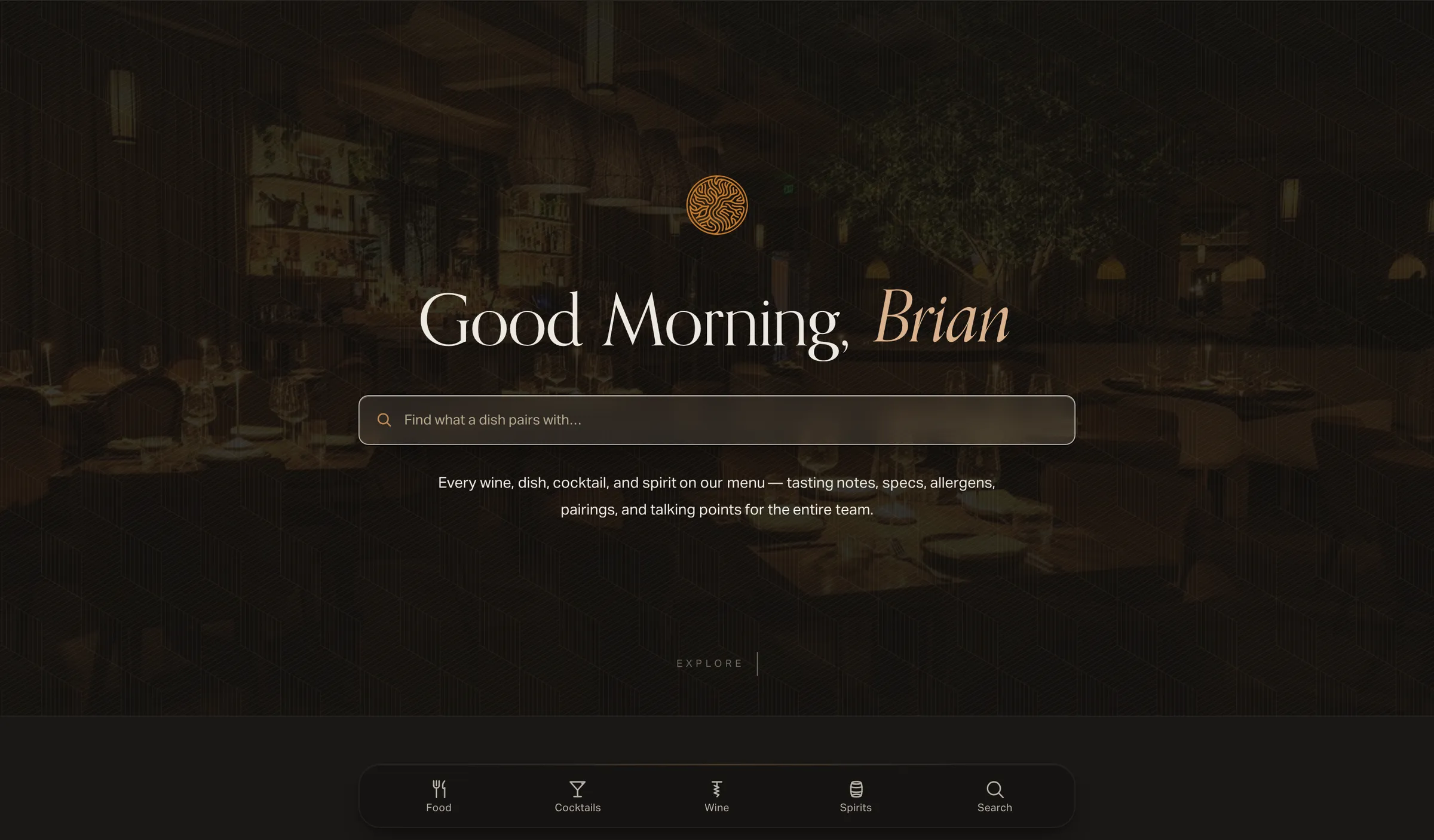
Project Loire
A platform for a restaurant’s staff and management. Staff use it to learn the menu and answer guests. Managers keep one record that prints the menus and training sheets, and can feed the website.
One record, and what it becomes.
- Built on the floorA restaurant I worked at opened with a lot to learn and not much time. I built myself a way to learn the menu, laid out the way a server thinks at a table.
- Change it once, print it freshGuests asked for a dish we had never offered; it was on the website for months. I was also redoing the wine list for every new vintage. So everything went into one record: change it once, print it fresh.
- Tap an allergy, see what carries itTap an allergy on a dish and the ingredient that carries it lights up. Or hide every dish that carries it.
- From the dish to the grapeA pairing opens that wine. A grape in the blend opens what it tastes like, in words a server can say.
- The right bottle, without scrolling the listNarrow the wine collection by style, by price with a slider, and by where it comes from, down to a region. Results change as you go. A lens on the label can be resized and clicked to zoom.
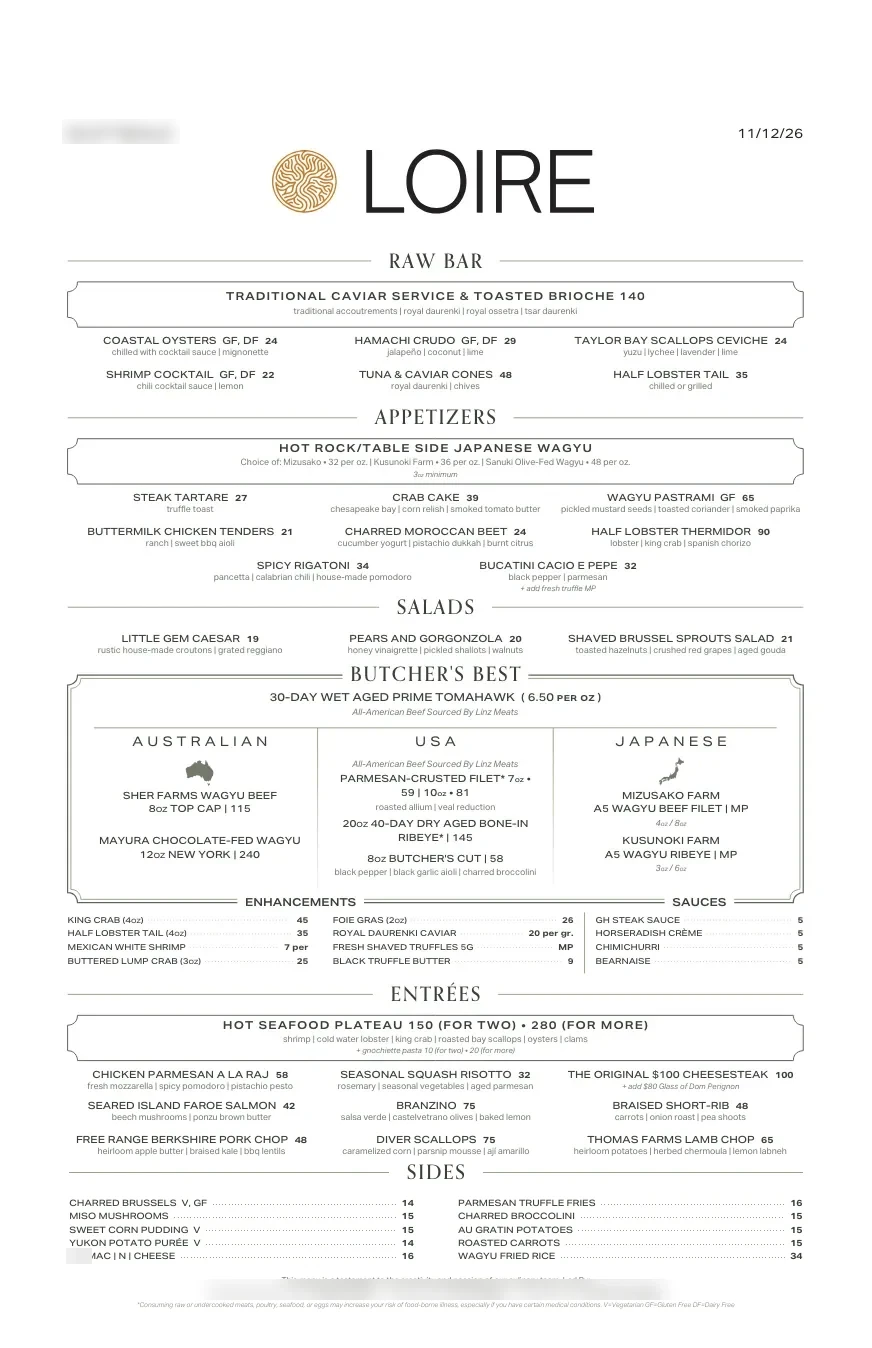
- The dinner menu, printed in about 3 secondsThe two-sided dinner menu, food on one side and drinks on the other, printed from the record in about 3 seconds.
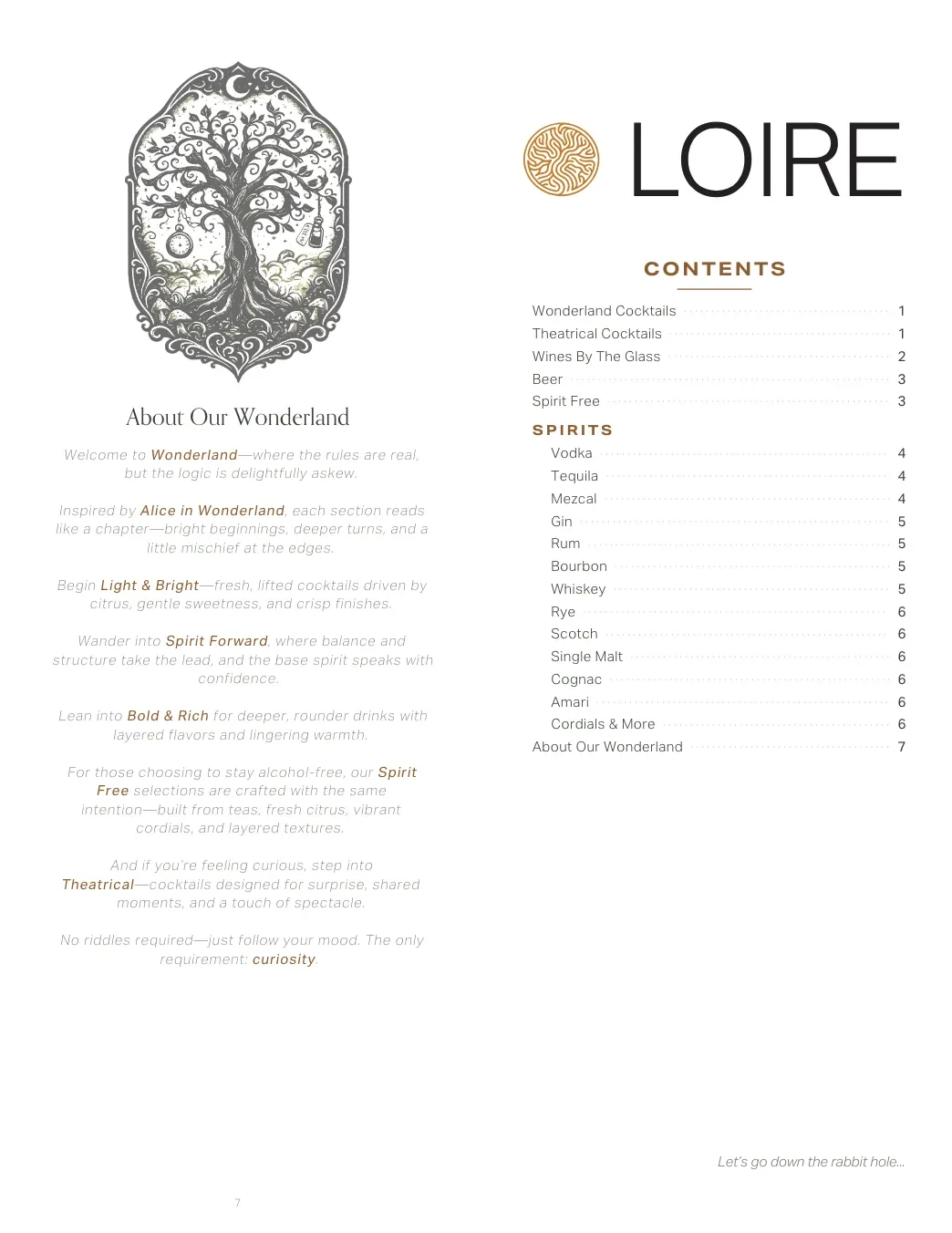
- The cocktail book, printed in about 4 secondsThe cocktail and spirits book, with the wines by the glass, printed from the record in about 4 seconds.
- A new vintage, and the wine list prints freshThe full list by the bottle, printed from the record in about 7 seconds, in the restaurant’s own look.
- The allergy list grows with the menuEach allergy keeps one list of ingredients, shared by every dish. Each new dish adds to it, so the next one is flagged as it is typed. A manager confirms it.
- A training sheet for any dishPick the dishes and print a sheet for each: the photograph, what is in it, the allergies and what to pour.
- Who can change it, and what changedStaff read. Managers edit. Every edit is kept with who made it and when.
- The house rules, written down for every jobThe restaurant’s written procedures, in one place for everyone.
- Written once, and every job sees itThe screen is the easy part. The person who keeps the list does the training and the printed menu from the same record, so the whole house works from one standard.
After the list:Change it once, in fullDinner menu, in fullWritten once, in fullThe project
Built on the floor. A restaurant I worked at opened with a lot to learn and not much time, so I built myself a way to learn the menu the way a server thinks at a table.
Tap an allergy on a dish and the ingredient that carries it lights up, or hide every dish that carries it. It helps a server find the ingredient. It is a way to look, not a guarantee.
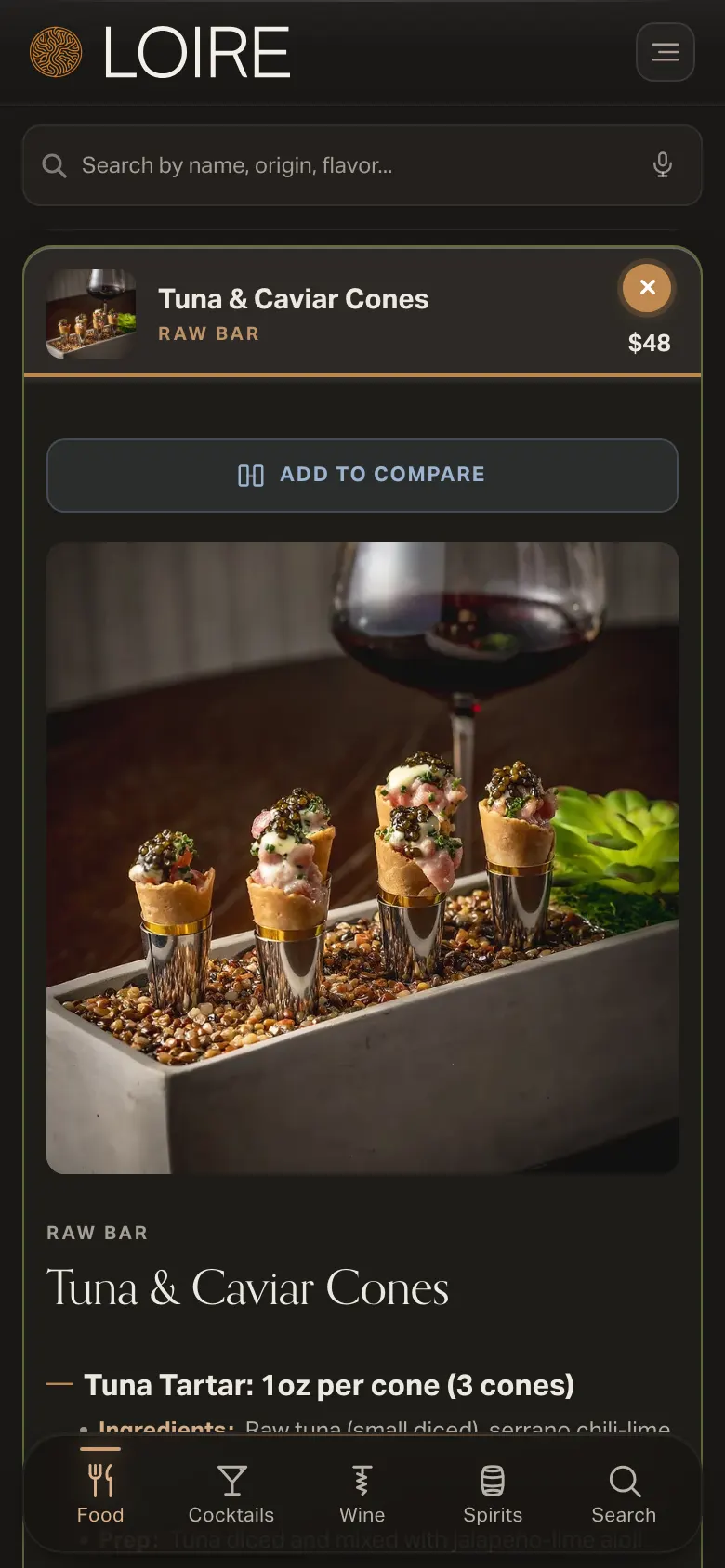
A dish lists the wines the sommelier chose. Tap a wine to open it, then tap a grape in the blend to see what it tastes like, in words a server can say.
A server finds a wine for a guest without scrolling the whole collection: by style, by price or by region. On a larger screen a lens zooms in on the label.
The dinner menu, built from the record when a manager asks, in the restaurant’s own look. It takes about 3 seconds.
The cocktail and spirits book, built from the same record: a reading copy and a print copy in one run, in about 4 seconds.
The full wine list by the bottle, built from the record in about 7 seconds. Change a vintage once and print it fresh.
Each allergy keeps one list of ingredient words shared by every dish. A new dish adds to it, so the next one is flagged as it is typed. A manager confirms.
Pick the dishes and print a sheet for each: the photograph, what is in it, the allergies and what to pour.
Staff read and managers edit. Every edit is kept with who made it and when.
The restaurant’s written procedures, in one place for everyone. Staff read them; managers write and change them.
The person who keeps the list does the training and the printed menu from the same record, so the whole house works from one standard.
Written once, and every job sees it.
The screen is the easy part. The person who keeps the list does the training and the printed menu from the same record, so the whole house works from one standard.
Everydish,wine,spiritandcocktail,
writtenonce.
Changetherecord:Trainit,printit,serveit.

One record
What the staff use
What the guests see
What the managers get
Every dish, wine and spirit
What is in it, how it is made, what to say about it, with the photograph.
The dinner menuabout 3 seconds
Printing the dinner menu.
The cocktail bookabout 4 seconds
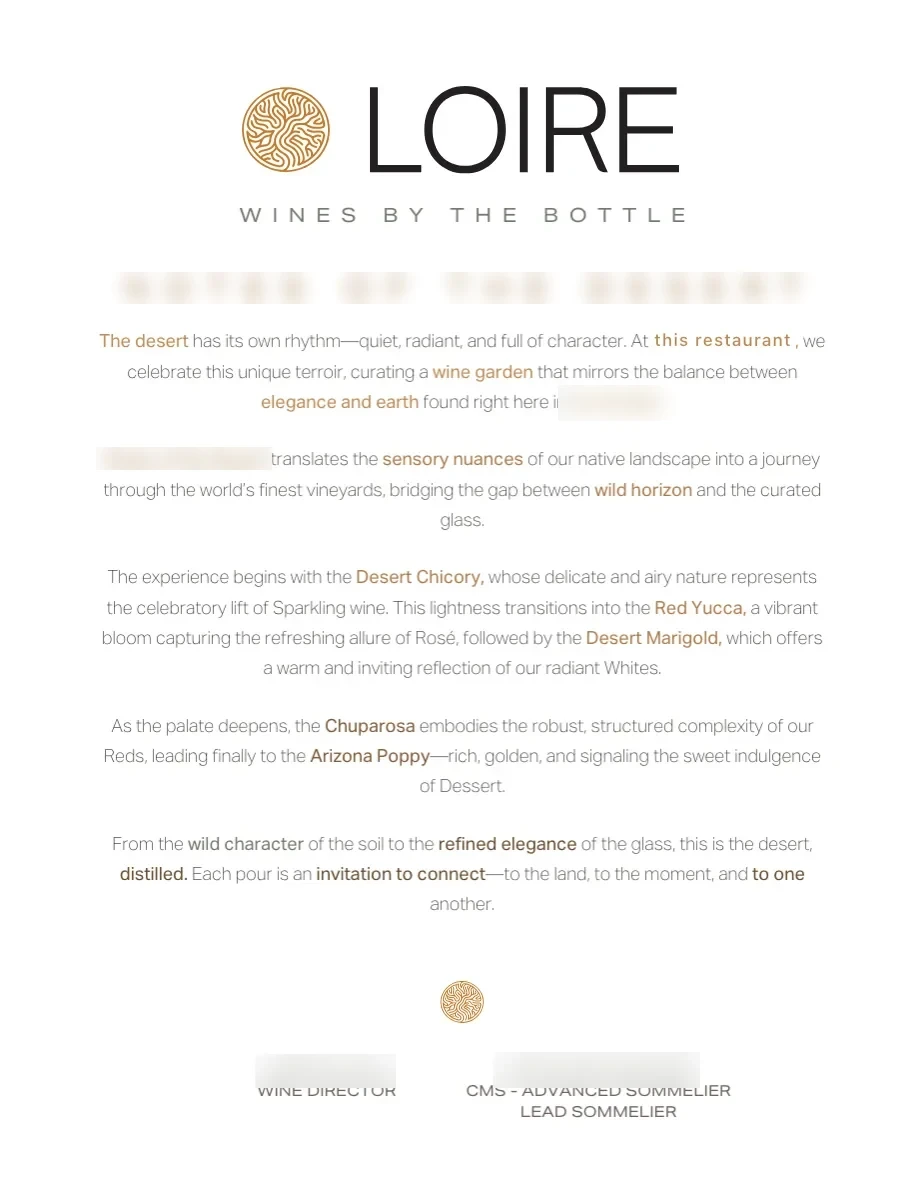
The wine listabout 7 seconds
The usual way: the chef tells management a change is coming; management briefs the designer; the designer does the work and sends it back; one or two rounds of changes; it is finalized; it is printed; staff are told; staff need a way to find it.
A chain of hand-offs, or one change.
The same menu change, two ways, on the same line of time.
The usual way
- What staff tell guestsOld versionCurrent
- The printed menuOld versionCurrent
- Thecheftellsmanagement
- Managementbriefsthedesigner
- Backforalook
- Finalized
- Printed
- Staffaretold
- Stafffindthenewone
Until it arrives, the room works from the old version: a dish that has gone, a special nobody has been told about.
With one record
- What staff tell guestsOld versionCurrent
- The printed menuOld versionCurrent
- Changetherecord.Staffseeitatonce.
- Printit.Thedinnermenutakesabout3seconds.
One record. One press. The usual way is still going.
Time
What it does for the restaurant
- Staff look up any dish, wine or drink on their own phone, tablet or computer.
- Training sheets print from the same record staff read.
- Staff can go back and refresh what they know, any week.
- The chef or sommelier who owns a list changes it once, themselves.
- Menus print in the restaurant’s own look, without going back to a designer.
- Managers can edit from any device with a sign-in.
- The same record can feed the website.
- Everyone reads one record, not what someone remembers.
The nerdy stuff.
How it is kept safe, and what it runs on. Security first.
Every table, locked.
Locked at the database
Staff details and records can be read only by the people allowed to see them, even if a screen has a bug.
Row-level security is switched on for every table the migrations create.
No one can promote themselves.
Who can change what
Staff read, managers edit, admins manage people. A manager cannot quietly make themselves an admin.
Staff, manager, admin and developer roles. A database trigger stops anyone promoting themselves or assigning a rank above their own.
Invited people only.
Invite only
No one can sign themselves up. Only people the restaurant has invited can get in.
No public sign-up. A database check turns away any Google sign-in that was not invited, and the app checks again.
A tested wall between restaurants.
One restaurant never sees another
Each restaurant’s menus, people and records stay its own. Built to hold more than one restaurant, with the wall between them tested.
Content is tagged by restaurant, and one restaurant’s manager cannot read or change another’s.
A manager confirms each suggestion.
Allergens a manager confirms
In the editor, a manager confirms or dismisses each allergen the platform suggests, and a server can tap one to see which ingredient carries it.
A named list of allergens and the ingredient words that carry them. Plain rules suggest them; the manager confirms or dismisses each one.
Dish edits, logged.
Who changed what
When a dish is wrong on the floor, you can see who changed it, what they changed and when.
Dish edits log who, which fields, which device and when. Only managers can read the log.
Printed from today’s record.
Print on demand
The menus, the wine list, the training sheets and the house standards come off the record when a manager prints them.
A generator for each: the dinner menu, drink book, wine list, training sheets and house standards, built on demand.
Ready before it goes live.
Draft, published, trashed
A new dish or wine can sit as a draft, out of staff view, until a manager makes it live.
Wines, food, cocktails and spirits each carry a state: draft, published or trashed. Trash empties after 90 days.
Rehearsed on a copy first.
Changes rehearsed first
Updates are tried on a copy with test users before they reach the restaurant your staff use.
The full unit test suite passes. Changes are rehearsed on a staging copy with disposable test users before production.
The most serious findings, fixed the next day.
A security review, then fixes
Someone promoting themselves, a bad sign-in redirect and two ways to plant hostile text were closed.
A full review on July 2, 2026, found nothing critical. The most serious findings were fixed and merged the next day, with tests.
Ready for a website to read.
A feed for the website
Your website could show the live menu, without anyone retyping it.
A read-only feed of brand, wines, food, cocktails and spirits. Guest fields only, unavailable items dropped, refreshed within a minute.
Common tools, nothing exotic.
What it is built on
Common, well-supported tools, not a custom framework that only one person understands.
Next.js 16 and React 19 in front, Postgres on Supabase behind, written in TypeScript.
The project.
- Live site
- No public site. These are its own screens.
- Started
- September 2024, when the restaurant opened.
- Ongoing
- Yes. Staff and managers use it, and it is being built out with pilot restaurants.
- Relationship
- Built for a restaurant I worked at. Now looking for pilot restaurants.
A first menu goes in from the sheets you already use: I load them in, or your staff can type them. Project Loire is looking for pilot restaurants to keep building it with. Ask me for more information.
